
Commercial property managers face a tough choice today. Do you stick with the tried-and-true traditional systems that have been working for decades? Or do you make the leap to Matter 1.5, the latest standard that promises to revolutionize how buildings operate?
This isn't just about keeping up with technology trends. It's about real business decisions that affect your bottom line, tenant satisfaction, and operational efficiency. Let's break down the key differences so you can make an informed choice.
What Exactly Is Matter 1.5?
Matter 1.5 is the newest version of the universal smart home standard, but don't let the "home" part fool you. This technology is making serious waves in commercial properties too.
Think of Matter 1.5 as a universal translator for all your building's smart devices. Whether you have security cameras from one manufacturer, HVAC controls from another, and lighting systems from a third company, Matter 1.5 helps them all talk to each other seamlessly.
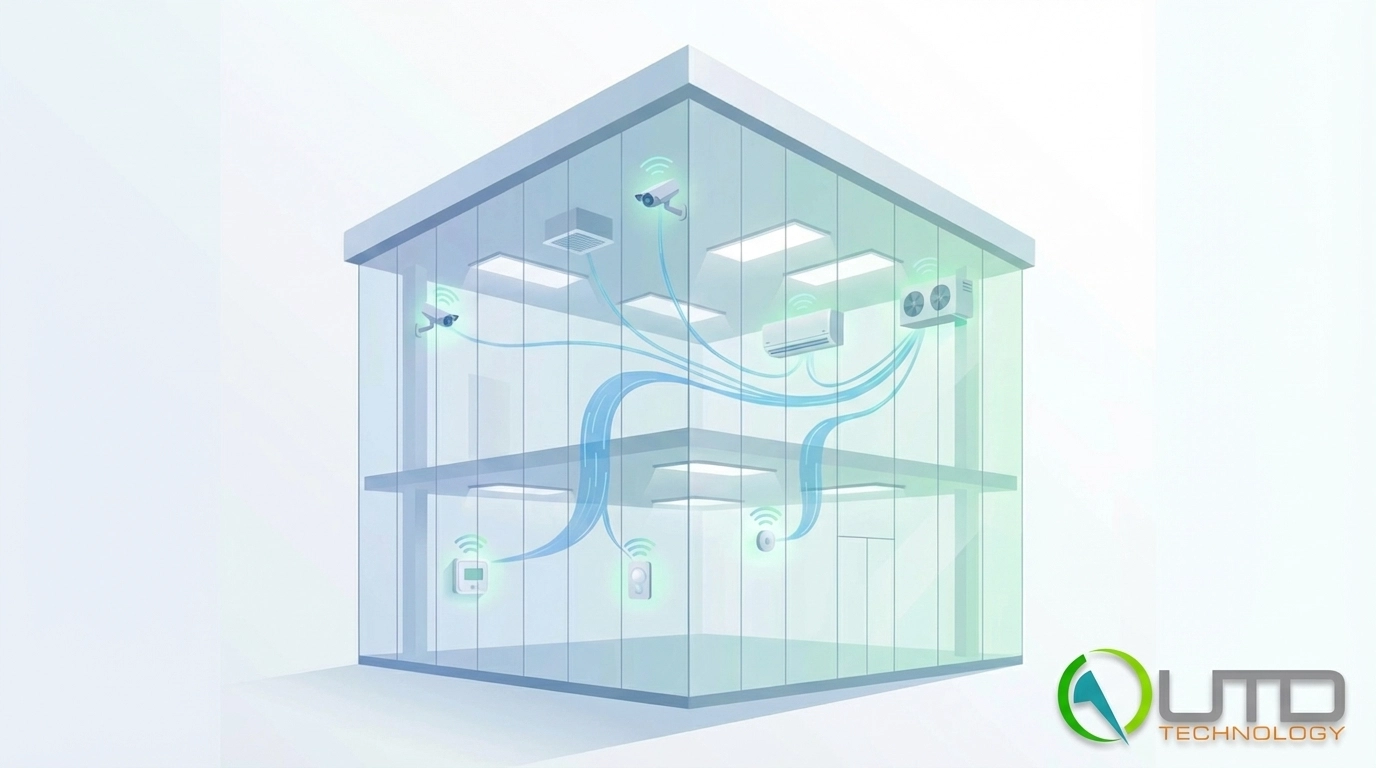
The latest version brings some game-changing features:
Enhanced Camera Integration: Your security system can now work with any Matter-compatible camera, regardless of brand. No more being locked into one vendor's ecosystem.
Advanced Energy Management: Real-time energy pricing and carbon intensity tracking help you optimize costs and meet sustainability goals.
Unified Device Control: Manage everything from window shades to garage doors through a single interface.
Improved Network Performance: Faster data transfers mean quicker response times when you need to adjust building systems.
Traditional Commercial Property Systems: The Old Reliable
Traditional systems have been the backbone of commercial properties for good reason. These typically include:
Proprietary Building Management Systems (BMS): Custom-built solutions that control HVAC, lighting, and security through dedicated networks.
Standalone Systems: Separate systems for different functions that operate independently – your fire safety system doesn't talk to your access control, which doesn't communicate with your energy management.
Vendor-Specific Solutions: Each system comes from a specialized company with its own protocols, software, and maintenance requirements.
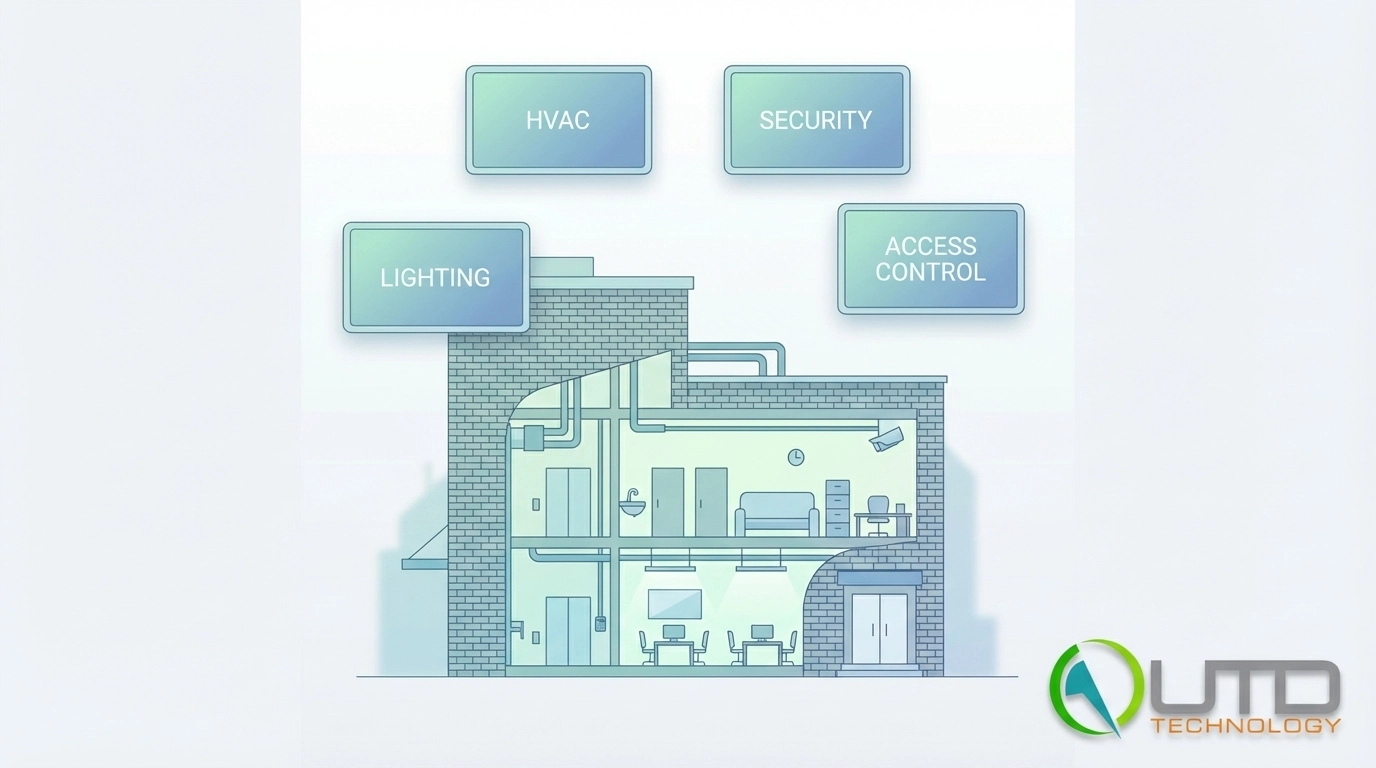
These systems have proven their reliability over decades. When a traditional BMS is properly installed and maintained, it can run for 15-20 years with minimal issues.
Head-to-Head Comparison
Interoperability
Matter 1.5: This is where Matter shines. Any Matter-certified device works with any other Matter device, regardless of manufacturer. Adding new equipment is as simple as scanning a QR code.
Traditional Systems: Often require costly integration projects. Want to add a new access control system to your existing BMS? You might need custom programming, additional hardware, and weeks of integration work.
Scalability
Matter 1.5: Scaling up is straightforward. Add new devices to your network and they automatically integrate with existing systems.
Traditional Systems: Scaling often means expensive upgrades to central controllers, additional licensing fees, and sometimes complete system replacements.
Maintenance and Support
Matter 1.5: Since it's an open standard, you're not locked into one vendor for support. Multiple contractors can work on your system.
Traditional Systems: You're typically dependent on the original installer or manufacturer for support, which can be expensive and limit your options.
Cost Considerations: The Real Numbers
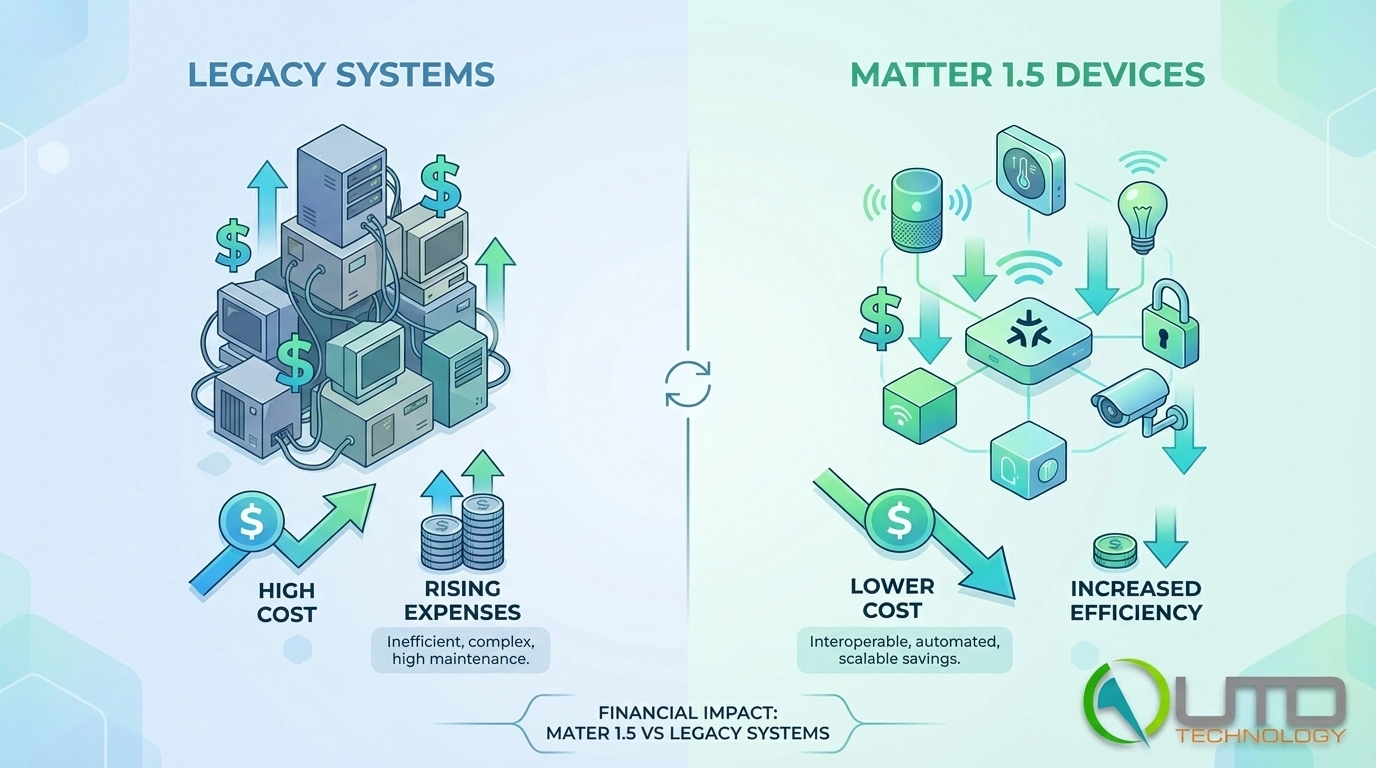
The cost comparison isn't straightforward, but here's what most commercial properties experience:
Initial Investment:
- Traditional systems often have lower upfront hardware costs
- Matter 1.5 devices may cost more initially but offer greater flexibility
- Installation costs vary widely depending on existing infrastructure
Long-term Costs:
- Traditional systems: Higher maintenance costs due to vendor lock-in, expensive upgrades
- Matter 1.5: Lower maintenance costs, easier upgrades, but newer technology means less predictable long-term reliability
Energy Savings:
- Matter 1.5's advanced energy management features can deliver 15-30% energy cost reductions
- Traditional systems may require separate energy management solutions
Security and Reliability: Where It Gets Serious
Security is non-negotiable in commercial properties, and this is where the comparison gets interesting.
Traditional Systems:
- Proven track record over decades
- Isolated networks reduce cyber attack surface
- Well-understood security protocols
- Established compliance with industry standards
Matter 1.5:
- Built-in encryption and security features
- Regular security updates through the Matter Alliance
- Newer standard means fewer discovered vulnerabilities
- But also means less real-world testing in commercial environments
The reality? Traditional systems have the advantage of proven reliability, while Matter 1.5 offers better ongoing security through regular updates.
Implementation Challenges
Traditional Systems:
- Require specialized installers
- Custom programming for integration
- Limited flexibility for future changes
- Well-documented installation processes
Matter 1.5:
- Easier installation and setup
- May require network infrastructure upgrades
- Limited availability of experienced commercial installers
- Fewer established best practices for large commercial deployments
Which System Is Right for Your Property?
Choose Traditional Systems If:
- You have a stable, long-term facility with minimal planned changes
- Your budget is tight for initial investment
- You have existing relationships with reliable traditional system installers
- Your property doesn't require frequent system updates or additions
- You prioritize proven reliability over cutting-edge features
Choose Matter 1.5 If:
- You plan to expand or modify your building systems regularly
- Energy efficiency and cost optimization are major priorities
- You want flexibility to choose different vendors for different systems
- Your property targets tech-savvy tenants who expect modern amenities
- You're planning a major renovation or new construction
The Middle Ground Approach
You don't have to choose just one. Many successful commercial properties are taking a hybrid approach:
- Keep critical systems (fire safety, emergency lighting) on traditional platforms
- Use Matter 1.5 for convenience systems (lighting control, climate optimization, tenant amenities)
- Plan a gradual transition as traditional systems reach end-of-life
This approach lets you gain experience with Matter 1.5 without risking your property's essential operations.
Making Your Decision
The choice between Matter 1.5 and traditional systems ultimately depends on your specific situation. Consider these key factors:
-
Your timeline: Traditional systems are available now with experienced installers. Matter 1.5 may require waiting for the right commercial contractors.
-
Your budget: Calculate total cost of ownership over 10-15 years, not just initial investment.
-
Your risk tolerance: Traditional systems offer predictable reliability. Matter 1.5 offers future flexibility but with some unknowns.
-
Your property's needs: A single-tenant industrial building has different requirements than a multi-tenant office complex.
Both options can work well for commercial properties. The key is choosing the system that aligns with your specific goals, budget, and operational requirements. Don't let technology trends drive your decision – let your business needs guide the choice.
Remember, the best system is the one that your team can properly maintain and that serves your tenants effectively, whether that's cutting-edge Matter 1.5 or time-tested traditional systems.
